
The Real Bali: How Locals Really Live
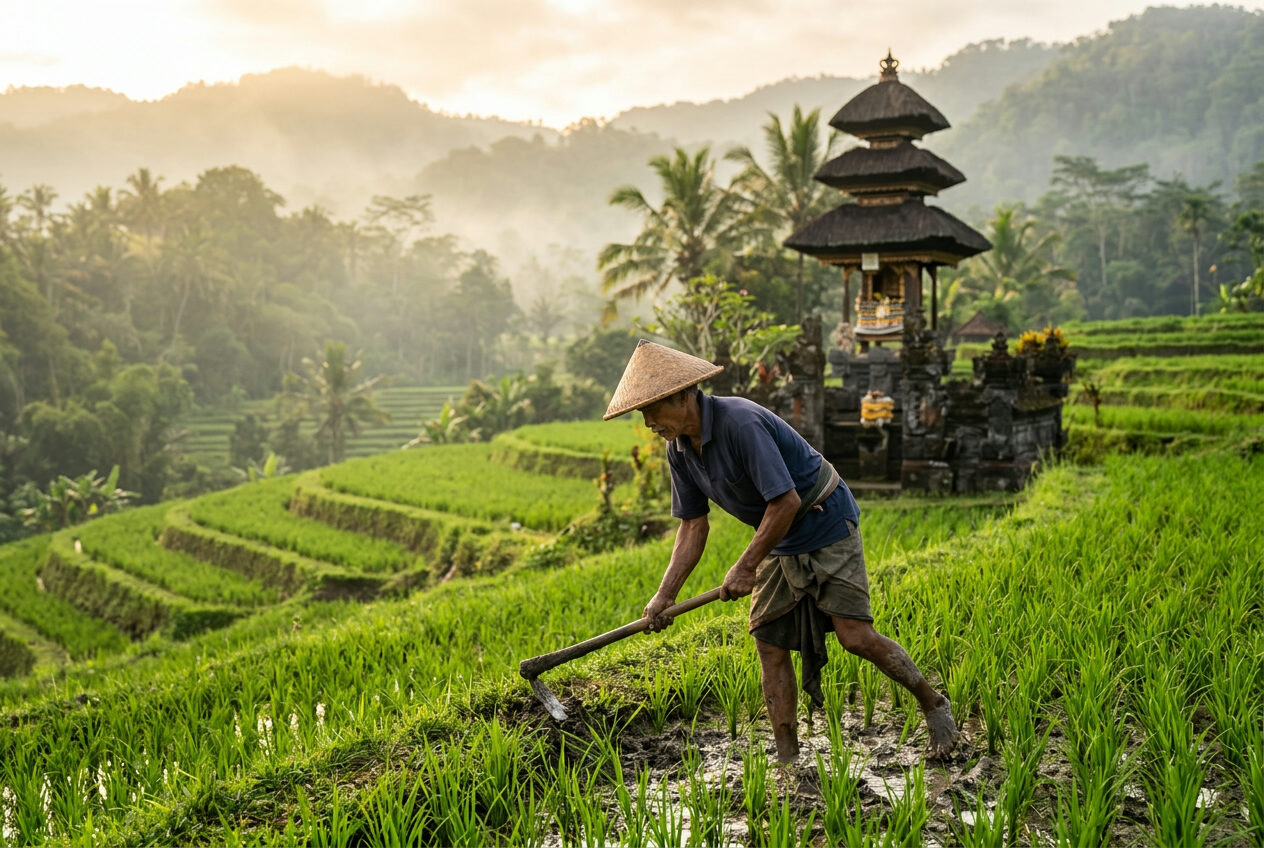
A tourist in Bali spends about $88 a day. A local earns about $190 a month. That gap contains the whole island. The same land is a paradise of pools and sunsets for some, and fields, temples, and obligations you do not choose for others.
We have lived and worked here for years, and the longer we do, the clearer it becomes: you cannot understand Bali from a hotel lobby. Here is what life looks like on the other side of the postcard.
You Are Born with a Debt
A Balinese person enters the world not as a blank slate but as a link in a chain. From day one, they carry obligations: to family, to temple, to community. This is not a metaphor. Land, the family temple, and care for parents usually pass to the eldest son, and with them comes lifelong responsibility.
Most start out in farming families. Rice fields feed you but bring almost no money. Rice is food on the table, not income in an account. So real money on the island is not sought from the land.
Religion Sets the Rhythm of Every Day
On Bali, people do not “go to temple on Sundays.” Religion is woven into the day. Morning offerings to the gods, temple holidays following several calendars at once, and ceremonies that can cost a family a year of savings.
Once a year the island literally shuts down. Nyepi, the Day of Silence: the airport closes, the lights go out, no one goes outside. For a full day Bali stands still. For a tourist it is exotic; for a local it is law that is not debated.
In adolescence they undergo a tooth-filing ritual: the six upper teeth are filed, symbolically taming six human vices: lust, greed, anger, delusion, pride, and envy. The community reminds you that you are part of a whole, not on your own.
No Army, but There Is a Draft
Instead of a military enlistment office, a Balinese person has the banjar, the village community. Everyone must join. The banjar requires participation in everything: holidays, funerals, temple repairs, endless ceremonies. If you skip events or break the rules, you risk a boycott and, in extreme cases, expulsion.
Why this matters for a guest of the island: everything on Bali runs on connections and community. Being left out of the banjar is scarier for a local than losing money. The same principle explains why respect for neighbors, quiet during ceremonies, and a slow pace are valued here: it is not laziness but a social contract.
School Is Weak, English Is Learned from Tourists
Public education leaves much to be desired, especially in English. So children learn the language not at a desk but on the job: in a cafe, at a reception desk, or behind a motorbike with a tourist on the back seat. For many, tourism is not just income; it is the only real social elevator.
To Get Ahead, They Go to Sea
The most common strategy for an ambitious young man from Bali is cruise ships. The conditions are hard, the contracts are long, and home and family stay thousands of kilometers away. But a couple of contracts can build savings that would take decades to gather at home. Many local success stories start exactly this way: years at sea, then a business on their native island.
Returning and Starting a Business
When they return, they dream of one thing: opening their own place. Most often a cafe or warung. New rules that restrict foreign business in some sectors are meant to give locals a head start. But the market is expensive, the bureaucracy is tangled, and competition is fierce. That start-up capital from the ship comes in handy.
Caste, Love, and Elopement Instead of a Wedding
The caste system is officially in the past, but it is still felt in marriage and daily life. A full traditional wedding costs so much that many couples choose a traditional “elopement”: a socially accepted and far more affordable way to marry. Romance here goes hand in hand with economics.
Why This Matters for Anyone Looking at Bali from the Outside
Because the island is not only a villa with an ocean view. It is a living culture with strict rules, a strong community, and people for whom your “vacation” is their home and job. Those who stay here long term—living, investing, building—win when they understand this other side. Respect for the local way of life on Bali is not politeness; it is the condition on which the island lets you inside.
The same principle drives how we work with real estate. Good villa management on Bali is not only about OTAs and dynamic pricing, but also a local team, community relationships, and understanding the rhythm of the island. And for those who see the island as an asset, we show both sides honestly in the investment section, from Ubud to Sanur.
Want to discover the real Bali and profit from it?
Talk to our team about villas in Ubud and Sanur: real occupancy data, honest income projections, and support at every stage.
Read also: Villa management company vs booking agent in Bali: full 2026 comparison; Direct villa bookings in Bali: how to reduce OTA commissions and increase income; OTA commissions for villas in Bali 2026: Airbnb, Booking.com, Agoda—what they really charge. More: Villa rentals in Bali.