
What “biggest villa in Bali” usually means before you chase square metres
People who type biggest villa in bali often want a trophy photo: endless pool, ten bedrooms, a party lawn that swallows a wedding. Bali listings answer with bedroom counts, “sleeps 20+,” and aerial shots that hide access roads, staff ratios, and empty-calendar risk. Size without a use case is just a bigger bill.
This page defines practical size bands, matches them to guest or owner use, and flags when mega inventory stops being an advantage. Solar Property Bali research — not personalised legal, tax, or investment advice. Have independent Indonesian counsel review any specific deal.
For purchase process, use /blog/buy-villa-in-bali-2026/. For build budget reality, use /blog/how-much-does-it-cost-to-build-a-villa-in-bali-2026/. For ROI underwriting depth, use the live Bali villa investment guide.
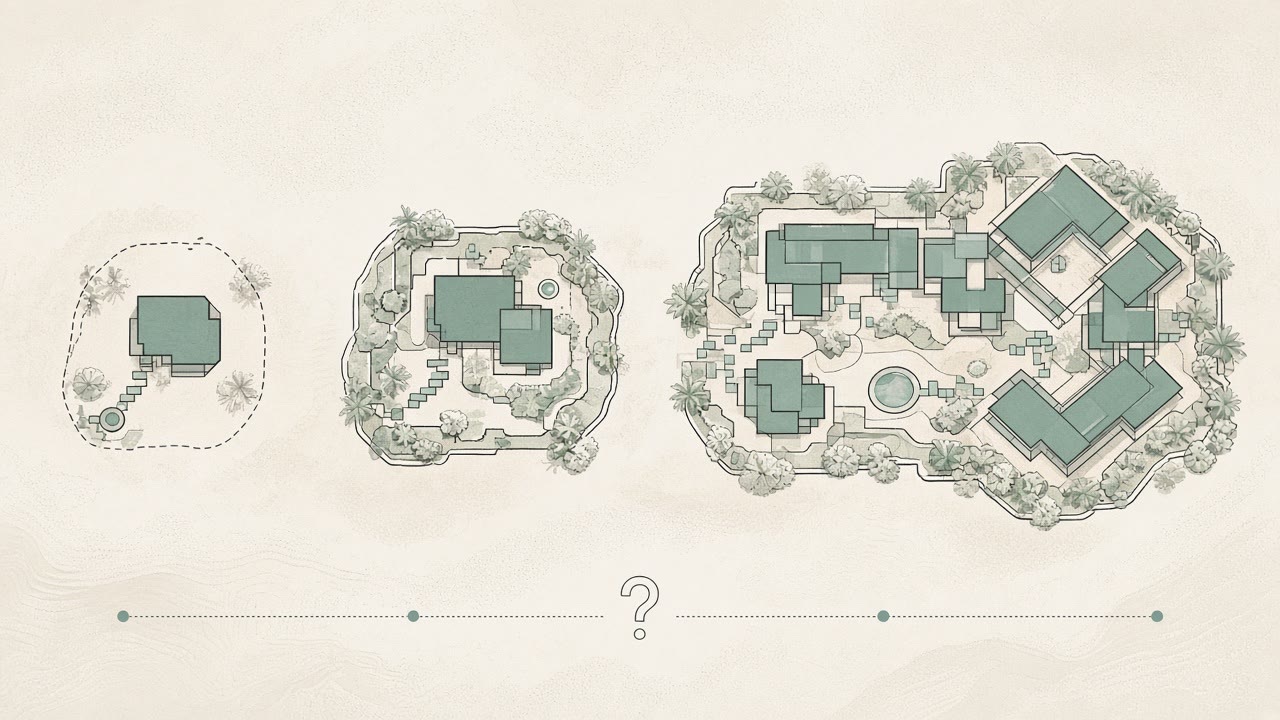
Size is not one number
In Bali marketing, “biggest” slides between four different rulers:
| Ruler | What agents emphasise | What you should verify |
|---|---|---|
| Bedrooms / sleeps | “8BR / sleeps 16” | Real ensuite count, daybeds vs beds, fire and egress limits |
| Built area | Indoor sqm | Habitable floors vs covered terraces counted as living space |
| Land plot | “1,500 m² compound” | Usable garden vs steep setback, river edge, shared access |
| Event capacity | “wedding for 100” | Zoning/permit for events, neighbour noise, parking, insurance |
A compound can win on land and lose on usable bedrooms. A tall villa can win on built area and lose on guest flow. Decide which ruler matches your thesis before you sort by “largest.”
Mega villas also cluster in different product shapes: multi-pavilion compounds, hotel-adjacent suites, and single-roof mansions. Solar’s live sale board on /investment/properties-for-sale/ currently surfaces hospitality-scale assets (for example Casa Solar 060, Pyramids 061, Hotel 062) — useful as format orientation, not as a claim that any one listing is “the biggest on the island.”
When bigger helps
Large inventory earns its keep in a few clear use cases:
- Multi-family or multi-generation stays — separate wings, two kitchens, quiet bedrooms away from the living deck.
- Group travel with privacy — friends or teams who want one compound instead of several neighbouring villas.
- Owner + guest split — a lockable owner pavilion while the rest rents (only if title, permit, and operator rules allow that split).
- Event-capable sites — lawn, parking, and indoor backup for ceremonies — only after zoning and neighbour reality check out.
If none of those apply, a well-run 3–4 bedroom villa often beats a half-empty palace on comfort and net cost. “Biggest” is a search habit; “right capacity” is an operating decision.
When biggest becomes a liability
Oversized villas fail in predictable ways:
Occupancy maths
Filling 8–12 bedrooms every week needs a different demand pool than a 3BR. Shoulder and low season stretch longer when the nightly rate sits in the trophy band. Underwrite calendar risk before you underwrite Instagram.
Staff and utilities
More bathrooms, more pool surface, more garden edge — fixed costs climb even on empty nights. Staff-cost ranges and ops framing live on Solar’s staff and management guides; this page only flags that mega size multiplies those lines.
Access and neighbours
Wide compounds on narrow lanes create transfer friction for guests and suppliers. Event noise complaints can kill the thesis that justified the land in the first place.
Capex and downtime
More roof, more waterproofing, more mechanical plant. A single leak season hurts harder when the asset only books for peak groups.
Title and use alignment
A “wedding villa” story still needs rental-use permission and building-permit alignment (PBG / legacy IMB, SLF where relevant). Size does not waive diligence — deepen with the live PBG/SLF article when the use case is commercial hospitality.
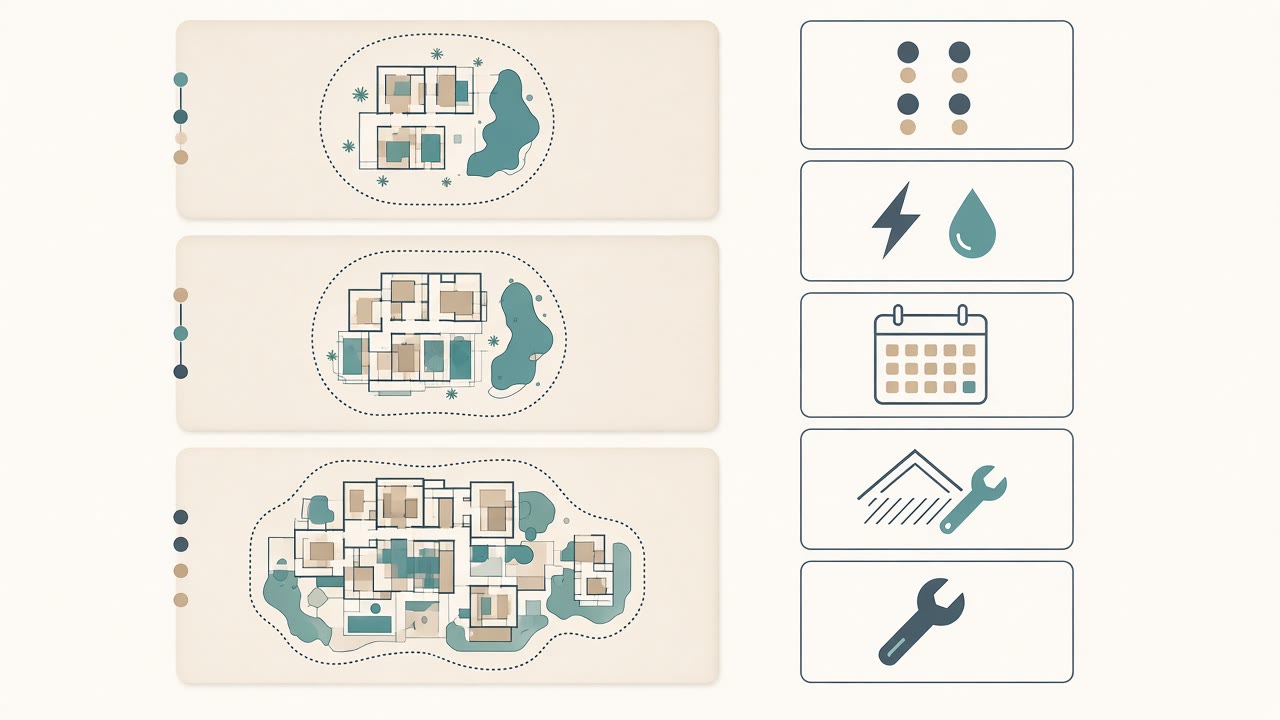
A shortlist filter for mega listings
Before you fly out for the “biggest” tour, score each candidate:
- Primary use in one sentence — owner stay, group rental, events, or split. If you cannot write it, do not deposit.
- Capacity vs realistic calendar — how many weeks per year you can honestly fill at the asking ADR band.
- Ops model named — who runs staff, OTAs, and maintenance after 1 June 2026 (Solar is not the active villa manager on its investment framing; confirm the operator separately).
- Access walk — approach by car and on foot at peak traffic; check parking for a full house.
- Documents before drama — remaining lease or company rights, transferable terms, permitted use. Structure pages: leasehold vs freehold, PT PMA, foreigners buy property.
Independent counsel / PPAT path — not the seller’s notary — should run title and deed checks. This article stays at the size filter, not a fee table clone.
Bottom line
The biggest villa in Bali headline is a marketing magnet. Treat it as a capacity question: which ruler matters, which use case pays for the empty weeks, and which ops model can actually run the compound. When mega size matches a real group or event thesis — and the documents clear — it can be the right product. When it only matches a drone photo, step down a size band and keep the deposit.
Next steps: scan hospitality-scale formats on /investment/properties-for-sale/, then underwrite on /investment/. For a residential “house” label instead of a mega compound, see /blog/buy-house-in-bali-2026/.
Ready to shortlist mega villa inventory?
Match size bands to a real use case first, then review hospitality-scale stock on Solar Property Bali.